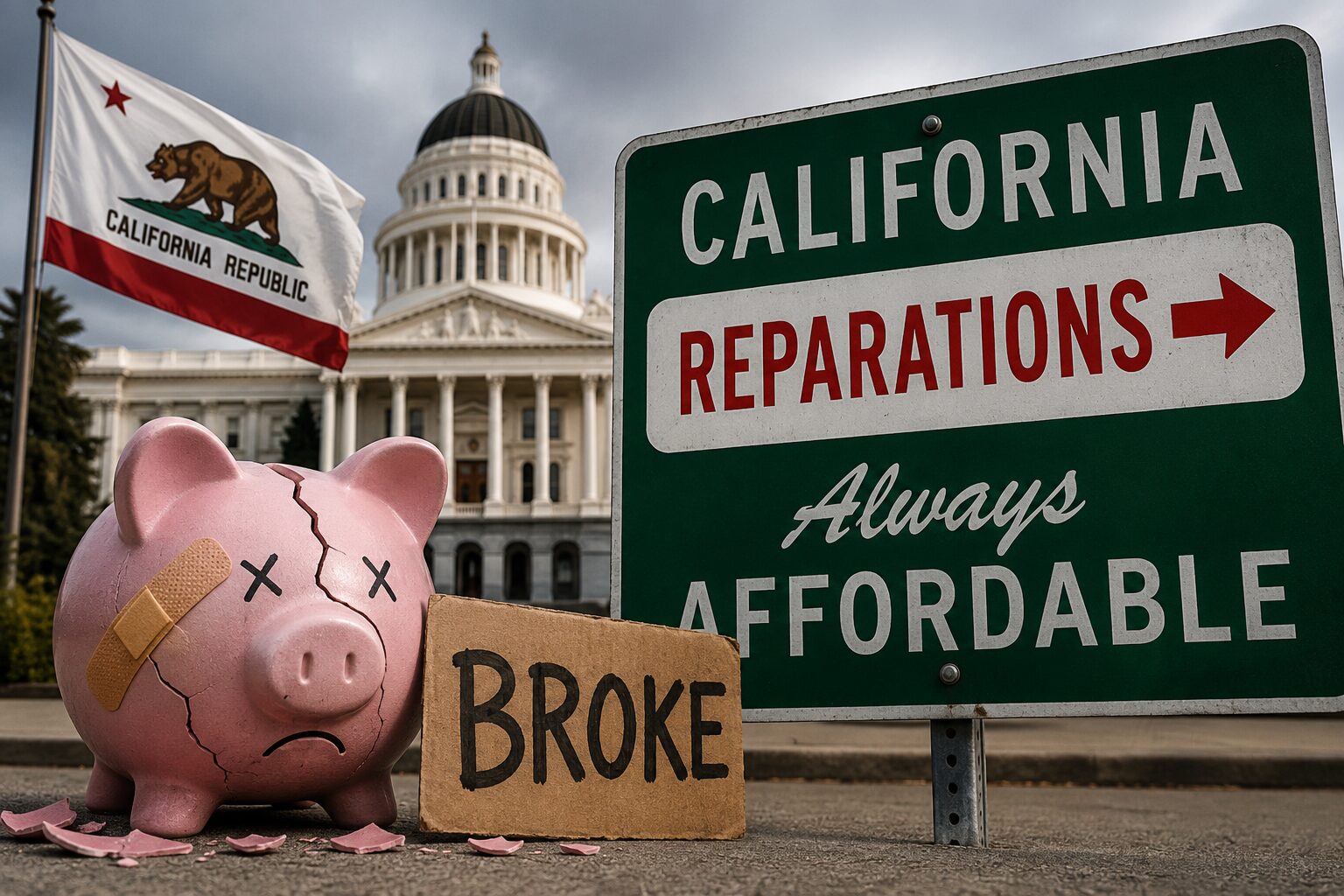
California politicians have a remarkable talent.
Every budget season we’re told the cupboards are bare. There’s never enough money for this, never enough money for that, and taxpayers are constantly reminded that difficult choices have to be made.
Unless, apparently, those choices involve reparations.
Alameda County, which warned earlier this year of a projected $91 million budget gap, has unanimously approved a sweeping reparations framework for Black residents. The county ultimately passed a balanced budget, but not before acknowledging significant fiscal challenges. Yet somehow, officials still found room to launch an ambitious new initiative focused on housing, education, healthcare, economic development, criminal justice reforms, and even left the door open for future cash payments.
Funny how that works.
Bombshell reparations plan for black residents passes in Alameda County – despite budget blackhole https://t.co/MQVBcYbgIs pic.twitter.com/JTtgPPKUvu
— California Post (@californiapost) July 19, 2026
Somehow There’s Always Money
This isn’t simply about dollars and cents. It’s about priorities.
Government officials routinely tell taxpayers that resources are limited. Roads need repair. Public safety costs money. Infrastructure ages. Pension obligations grow. Everyone is asked to understand that budgets require discipline.
Then a proposal like this comes along, and suddenly the conversation changes from fiscal restraint to government expansion.
Not only did supervisors approve the reparations framework, they also approved creating a permanent committee to oversee its implementation.
Because, naturally, nothing says “we’re watching every penny” quite like adding another layer of government.
The Bigger Problem With Reparations
Even setting aside the budget questions, reparations remain a deeply flawed idea.
America’s history includes undeniable injustices. Those chapters should be taught honestly and remembered truthfully.
But asking today’s taxpayers to compensate today’s residents based on race raises serious questions that deserve more than slogans and applause lines.
- Should government determine benefits by ancestry?
- Should citizens be treated differently because of the color of their skin?
- How many generations back do we go?
- Who qualifies?
- Who pays?
Those aren’t rhetorical questions. They’re the practical realities that every reparations proposal eventually runs into.
The promise of equal justice under the law has always meant that government should strive to treat Americans equally as individuals, not divide them into groups based on race.
Replacing one form of unequal treatment with another doesn’t move the country forward. It simply changes who benefits.
The Government Never Runs Out of Ideas for Spending Your Money
Supporters argue this plan is about correcting historical inequities through housing initiatives, educational investments, healthcare programs, economic development, and criminal justice reforms. Cash payments, they say, are only one possibility.
Perhaps. But every one of those ideas costs money. Every new program requires administrators, oversight, reports, committees, and long-term funding. Those costs don’t disappear because they’re wrapped in noble intentions. Taxpayers eventually receive the bill.
And there’s an even bigger question. If government is going to start assigning responsibility and compensation based on events that happened generations ago, where does that principle end? Do we eventually start tracing every American’s ancestry back to an “origin” country? Do we redraw property claims across the entire nation? Do we return all of the land to Native American tribes? History is full of injustice, conquest, displacement, and tragedy. Trying to settle every historical wrong by dividing today’s citizens into racial categories doesn’t bring justice; it creates a new set of grievances.
The Raised Eyebrow
Whether you support reparations or oppose them, one question remains unavoidable.
If county leaders warn they’re facing a budget crunch, why is this the moment to launch an expansive new government initiative?
Californians are constantly told difficult financial decisions must be made. Apparently those difficult decisions rarely involve saying no to bigger government.
Budget crises may be real.
But judging by Alameda County’s latest vote, they’re also surprisingly flexible.
Feature Image: AI-generated illustration.
About the Author